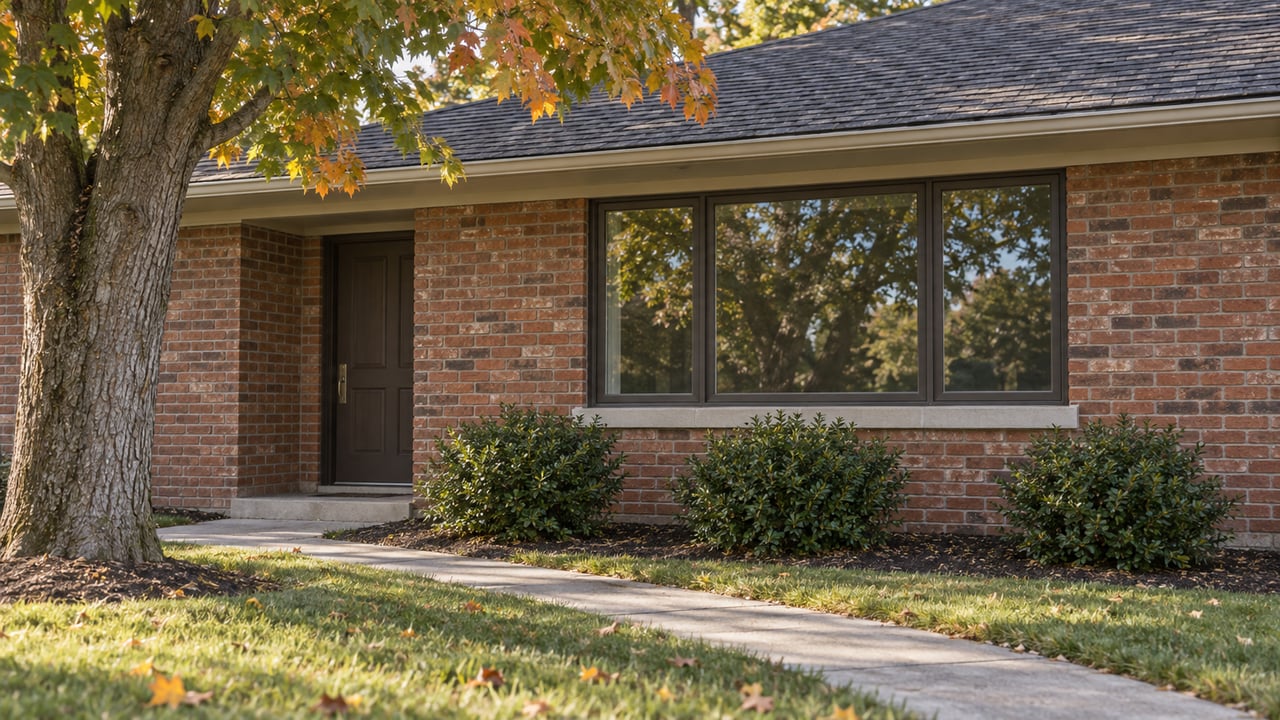
Buyers touring East Carmel often treat it as one market. It isn't. The neighborhood absorbed most of Carmel's growth between 1960 and 2000, and that forty-year build-out left behind at least three distinct generations of housing stock sitting on the same streets, sometimes the same cul-de-sac. A ranch from 1971 and a custom build from 1999 can carry the same East Carmel address and completely different inspection risk. The subdivision name and the price tag tell you less about what your inspector will find than the decade the foundation was poured.
That distinction matters right now because of simple math. A pipe material called Orangeburg was the standard residential sewer lateral across the country from the 1940s through the early 1970s, and it was built with a useful life of about 50 years under ideal conditions. Brookshire, one of East Carmel's original neighborhoods, opened its city-owned golf course in 1970. Ranches from that same construction wave are turning fifty this decade, right on schedule for the material underneath them to be reaching the end of its design life, sometimes sooner. That's a fact worth knowing before you write an offer, not after your first backup.
The Decade That Built East Carmel
East Carmel's growth tracks almost exactly with Carmel's transformation from a small town into an edge city. Most of what stands today went up between 1960 and 2000, and the result is a patchwork rather than a single style. Ranches and bi-levels with winding streets and cul-de-sacs went in first, largely through the 1960s and 70s. Custom-built neighborhoods like Kingswood, developed starting in 1988 along Gray Road between 106th and 116th Streets, filled in through the late 80s and 90s. Estate homes, private lake communities, and golf-course-adjacent builds in places like Woodland Springs, Overture, and Avian Glen came later still, often in the 1990s and 2000s.
Price reflects that spread more than it reflects any single neighborhood identity. Standard East Carmel homes generally run from the high $200,000s into the high $600,000s, while the lake, golf, and estate tier sits between $700,000 and $1.4 million. A buyer comparing two listings in that gap isn't just paying for square footage or a view of the fourth hole at Brookshire Golf Course. They're often paying for a newer sewer lateral, newer wiring, and a mechanical system that hasn't hit its first major replacement cycle yet.
What Fifty Years Underground Actually Means
Orangeburg pipe is a bituminous fiber material, wood pulp bound with coal tar pitch, that took over residential sewer lines nationally once metal grew scarce and expensive after the war. It was cheaper and faster to install than cast iron, which is exactly why builders leaned on it through the postwar housing boom. It also degrades in a specific, predictable way: the pipe walls soften and lose their round shape underground, eventually collapsing into an oval cross-section that restricts flow long before anyone sees a wet spot in the yard.
The material was phased out through the 1970s as PVC took over, which places East Carmel's original ranch and bi-level stock squarely inside the installation window. None of this is visible from the driveway. A camera inspection is the only way to confirm what's actually in the ground, and it's worth requesting on any East Carmel home built before roughly 1975, regardless of how updated the kitchen looks.
This is not a defect unique to East Carmel. It's a defect built into an entire era of American housing, and East Carmel simply has a meaningful share of homes from that era still standing.
The Three Generations, Side by Side
| Construction era | What went up | What it means for your inspection |
|---|---|---|
| 1960s to mid-1970s | Ranches and bi-levels, including Brookshire's original streets (golf course opened 1970) | Request a camera sewer scope before waiving any inspection contingency. Orangeburg pipe is a realistic possibility and won't show up on a standard walkthrough. |
| Late 1970s through 1980s | Custom-built neighborhoods like Kingswood (1988) | Sewer material shifts toward cast iron and early PVC. Attention moves to original mechanicals, roofing cycles, and electrical panels approaching end of service life. |
| 1990s through 2000s | Estate, lake, and golf communities such as Woodland Springs, Overture, and Avian Glen | Sewer risk drops sharply. Radon exposure does not. |
That last column is the part buyers of newer East Carmel homes tend to skip, and it's the more expensive mistake.
Newer Doesn't Buy You Out of the Radon Conversation
Hamilton County sits in the EPA's Zone 1, the agency's highest radon risk category, and that classification doesn't care what year your home was built. Local testing in Carmel and Westfield has found roughly one in three homes above the EPA's 4.0 pCi/L action level, with average readings around 7.0 pCi/L, nearly double the threshold at which the EPA recommends mitigation. A 2003 build in the Townhomes at Hazel Dell sits on the same glacial till and limestone bedrock as a 1971 ranch in Brookshire. The foundation type and the basement's contact with the ground matter more than the decade on the survey.
According to My Indy Home, Indiana's standard home inspection doesn't include radon by default. It's identified separately under state law, and buyers who want it have to ask for it as its own test, typically run over a minimum 48-hour period with the house sealed. That's an easy step to skip when the rest of an offer is moving fast, and it's exactly the step that catches buyers who assumed a newer home meant a cleaner inspection report.
What This Actually Changes About How You Shop
None of this means avoid East Carmel's older stock or overpay for the newest builds. It means match your inspection strategy to the specific home, not to the neighborhood's reputation. A ranch built in 1971 might have already had its lateral replaced. A 2001 custom build might still test high for radon. The only way to know either is to test.
Before writing an offer on an East Carmel home, it's worth asking your agent or the listing to confirm:
- The approximate age of the sewer lateral, and whether a camera scope has ever been run on it
- Whether radon testing has been done in the past two years, and at what level
- The age of the roof and mechanical systems relative to the home's construction decade
- Whether any prior owner disclosure mentions sewer backups, standing water, or mitigation work
A sewer scope is inexpensive relative to the repair it can flag. Full lateral replacement for an Orangeburg or clay-tile line typically runs a few thousand dollars, money far better spent before closing than after you've moved the furniture in.
FAQ
Does a home built in the 1990s or 2000s still need a sewer scope? The risk is lower, since most of that stock was built with PVC laterals, but a scope is still cheap insurance and gives you documented proof of condition for your records.
Is radon testing required by Indiana law? No. It's identified as separate from the standard statutory home inspection, which means buyers have to request it specifically rather than assume it's already covered.
How would I know if a specific East Carmel home has Orangeburg pipe without a scope? You generally can't. Construction date narrows the possibility, but only a camera inspection confirms the actual material and its condition.
Does living near Brookshire Golf Course tell me anything about my own home's sewer line? Only in the sense that the course's 1970 opening marks roughly when that section of East Carmel was built out. Homes from that same original wave share the same era-specific risk, whether or not they back up to the fairway.
If you're comparing East Carmel homes across different decades and want a second set of eyes on what a listing's age actually implies before you write an offer, Lauren Hewitt can walk the inspection timeline with you street by street.
This article is general information, not legal, tax or financial advice. Consult a qualified professional about your situation.