Wondering what neighborhood amenities you should really expect in West Carmel? If you are comparing communities in 46032, it helps to know that not every neighborhood offers the same lifestyle, and the differences can affect both your daily routine and your monthly costs. This guide will walk you through the amenity patterns buyers commonly see in West Carmel, from basic pool neighborhoods to more expansive master-planned communities, so you can focus on the features that fit the way you want to live. Let’s dive in.
West Carmel Starts With Strong Public Amenities
One of the biggest advantages of living in West Carmel is that neighborhood amenities are only part of the picture. The area also benefits from Carmel’s broader public recreation network, which gives you access to trails, bikeways, and parks beyond your subdivision entrance.
Carmel’s Access Bikeway system includes eight cross-city routes and five loops. For west-side residents, the West Loop is especially relevant. It is a 9.7-mile route that starts and ends at Creekside Middle School and passes neighborhoods, schools, and west-side destinations.
You also have access to West Park at 2700 W 116th St through Carmel Clay Parks. This public park includes trails, a pavilion, a fishing point, a playground, restrooms, swings, a sledding hill, and a splash pad.
That matters when you compare HOA dues. In West Carmel, neighborhood fees often support community-specific features rather than replacing basic city services, because Carmel Utilities provides municipal water and wastewater service, and trash and recycling notices are also handled through the city utility system.
Amenity Tiers in West Carmel
If you tour several neighborhoods in 46032, you will likely notice three broad amenity levels. These are not official city categories, but they are a practical way to think about what you may be buying into.
Basic HOA Amenities
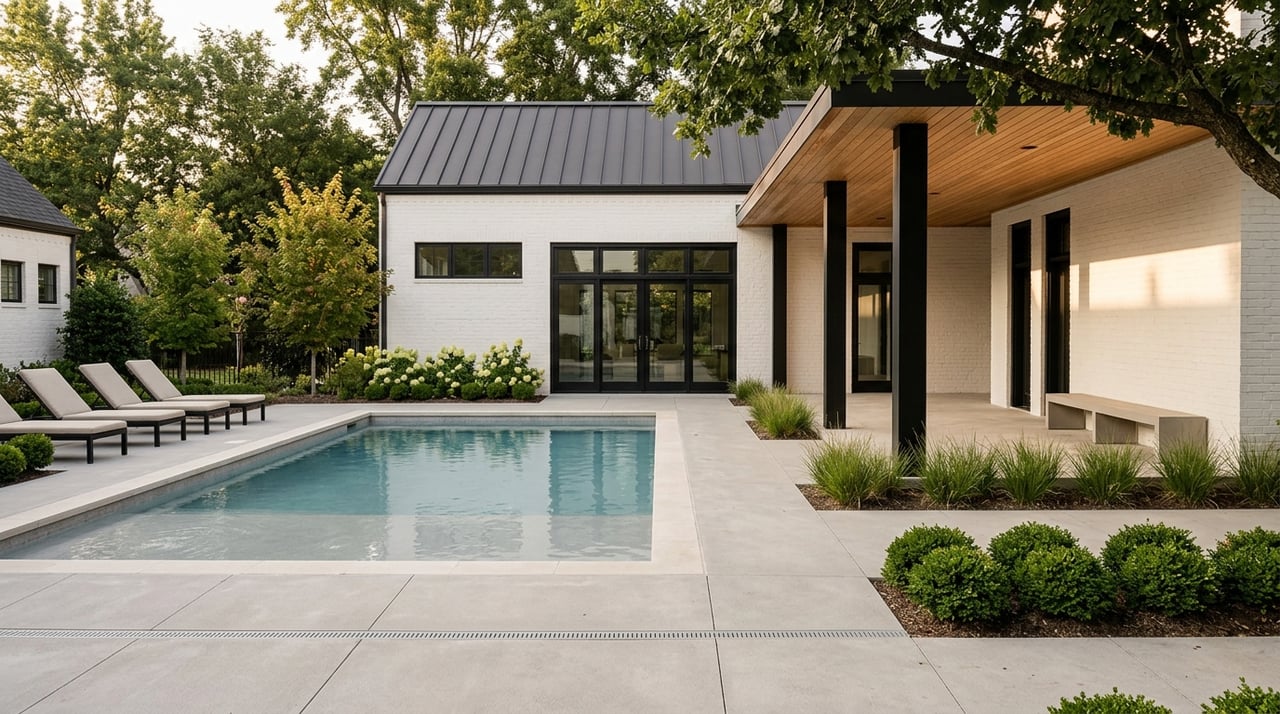
At the most modest end, you will often find neighborhoods centered around a seasonal pool and a social calendar. These communities can still offer a strong sense of organization and neighborhood identity, even without a long list of physical amenities.
Buckhorn Estates is a good example of this pattern. Its public information highlights a neighborhood pool, maintained yards, and community events such as pool gatherings, Halloween and holiday parties, an annual garage sale, and an end-of-summer cul-de-sac party.
Mid-Tier HOA Amenities
The next level often includes a pool plus sports courts and maintained common areas. For many buyers, this tier strikes a practical balance between lifestyle benefits and HOA complexity.
Cheswick Place reflects this setup. Its HOA pages show a neighborhood pool, courts, and HOA-maintained common areas, which gives residents more recreational options without the larger scale of a master-planned community.
Premium Master-Planned Amenities
At the top end, you will find communities with multiple amenity centers, more pathways, and more structured resident access. These neighborhoods often feel more self-contained and may appeal to buyers who want recreation, gathering space, and community programming built into everyday life.
The Village of WestClay is the clearest local example. According to its owners association, the community offers three outdoor pools, three clubhouses, three exercise rooms, more than 171 acres of open space, 10 miles of pathways, sports courts, a baseball diamond, fire pits, shelters, and resident-only event spaces.
What a Premium Community Can Look Like
The Village of WestClay shows what is possible when a West Carmel neighborhood is designed around amenities. In addition to recreation, the community includes dining and shopping, along with special-interest clubs, holiday festivities, summer concerts, and a resident events calendar.
For some buyers, that variety is a major draw. You may be looking for a neighborhood where amenities support an active routine, easy gathering spaces, and frequent events close to home.
It is also important to understand that more amenities usually bring more structure. WestClay uses scan cards and reservation systems for access to amenity centers and private event spaces, which is common in communities with more extensive shared resources.
What to Expect in Traditional Neighborhoods
Not every buyer wants a master-planned setup, and that is part of what makes West Carmel appealing. Some neighborhoods offer a simpler experience that still covers the basics many homeowners want.
In Cheswick Place, for example, public HOA details point to a more traditional custom-home neighborhood with a pool, courts, and common-area maintenance. That can feel more straightforward if you want shared amenities without a highly programmed lifestyle.
Buckhorn Estates takes an even simpler approach. Its mix of a seasonal pool, maintained yards, and neighborhood events may appeal to buyers who value a lower-key community structure while still enjoying shared spaces and organized activities.
HOA Services Usually Cover Local Extras
A common misconception is that HOA fees in West Carmel replace city services. In many 46032 neighborhoods, that is not the case.
Instead, HOA services usually focus on common-area care, exterior standards, communication, and resident programming. Cheswick Place is a useful example because its public information states that the City of Carmel provides water supply, trash removal, and street maintenance, while the HOA maintains common areas and sidewalk segments that border common areas.
WestClay states that its annual association fee covers the overall management of the village. Buckhorn’s neighborhood site also organizes practical resident information in one place, including pool rules, events, architectural design, mailboxes, bylaws, utilities, and solicitation rules.
When you evaluate dues, it helps to ask what is actually included. A higher monthly or annual cost may reflect more amenities, more management, or more resident services rather than basic utility coverage.
Rules Matter as Much as Features
When buyers compare amenities, they often focus on what is available and overlook how access works. In West Carmel, rules and access systems are an important part of the lifestyle equation.
Even smaller amenity packages usually come with posted pool rules, operating hours, reservation procedures, or resident-only access. Cheswick Place’s public pages, for example, include pool rules, pool hours, court reservations, and governing documents.
Buckhorn’s pool information shows seasonal access from Memorial Day through Labor Day, along with limited hours, guest limits, and other resident rules. WestClay also shows private-event reservations and member-only access systems for amenity centers.
As a buyer, this means you should look beyond the brochure version of amenities. A pool, clubhouse, or court may sound great, but you will want to know when it is open, whether guests are allowed, and whether reservations are required.
Smart Questions to Ask Before You Buy
If amenities are a big part of your home search, it helps to ask direct questions early. That can keep you from being surprised after closing.
Here are a few especially relevant questions for West Carmel communities:
- Is the pool open year-round or only seasonally?
- Are clubhouse or event spaces reservable?
- Do guest limits apply to the pool or other amenities?
- Are access cards, codes, or reservations required?
- What do HOA dues actually cover?
- Does any amenity require a separate membership?
- Who maintains common areas, sidewalks, or neighborhood landscape features?
These questions are useful whether you are buying in a smaller established neighborhood or a larger master-planned community. The more amenities a neighborhood offers, the more important it becomes to understand the rules and operating structure.
How to Match Amenities to Your Lifestyle
The best neighborhood for you is not always the one with the longest amenity list. It is the one that aligns with how you actually want to live.
If you prefer a simpler setup, a neighborhood with one pool and a few annual events may be all you need. If you want more built-in recreation and gathering spaces, a community with courts, clubhouses, exercise rooms, and pathways may be worth the added structure and cost.
West Carmel gives you options across that spectrum. Because the area also benefits from Carmel’s citywide trails, bikeways, and parks, you may not need every feature inside your neighborhood to enjoy an active lifestyle.
That is why a local, neighborhood-by-neighborhood approach matters. The right fit comes from understanding both the private amenities inside the community and the public infrastructure around it.
If you are comparing West Carmel neighborhoods and want help sorting through amenities, HOA structure, and day-to-day lifestyle differences, Lauren Hewitt can help you narrow your options with clear, local guidance.
FAQs
What amenities are common in West Carmel neighborhoods?
- In West Carmel 46032, common neighborhood amenities range from a seasonal pool and social events to courts, clubhouses, exercise rooms, pathways, and maintained common areas, depending on the community.
Do West Carmel HOA fees usually include city utilities?
- Usually, no. In West Carmel, core municipal services like water and wastewater are provided by Carmel Utilities, so HOA dues often cover neighborhood-specific features and maintenance instead.
Which West Carmel community has the most amenities?
- Based on the public neighborhood information in this guide, the Village of WestClay offers one of the most extensive amenity packages in 46032, including multiple pools, clubhouses, exercise rooms, pathways, sports areas, and event spaces.
Are neighborhood pools in West Carmel open all year?
- Not always. Some West Carmel neighborhoods post seasonal pool access, such as Buckhorn Estates, where the pool operates from Memorial Day through Labor Day.
Should you expect rules for West Carmel neighborhood amenities?
- Yes. Public HOA pages in West Carmel commonly show rules for pool hours, guest limits, reservations, and access systems, especially in communities with more extensive amenities.
Do you need a master-planned community to enjoy amenities in West Carmel?
- No. West Carmel also benefits from citywide public amenities like the Access Bikeway network and West Park, so you can still enjoy recreation options even if your neighborhood has a simpler amenity package.